
Have you ever wished your longboard could give you a boost without you having to push? Turning your regular longboard into an electric one is easier than you might think.
By adding a motor, battery, and a few key parts, you can transform your ride into a powerful, fun, and efficient machine. Whether you want to cruise faster, tackle hills with ease, or simply enjoy the thrill of an electric longboard, this guide will walk you through the simple steps to make it happen.
Ready to upgrade your longboard and take control of your ride? Let’s dive in and get your electric longboard project started!
Choosing The Right Deck
Choosing the right deck is the first step in making your longboard electric. The deck supports all components, so it must be strong and suitable. A good deck improves riding comfort and safety. Picking the correct deck size and material affects your board’s performance and durability.
Deck Materials And Size
Longboard decks come in different materials like maple, bamboo, and fiberglass. Maple is strong and stiff, giving good control. Bamboo is flexible and light, making the ride smooth. Fiberglass adds extra strength and resists damage. The deck size matters too. Longer decks offer stability and space for parts. Shorter decks are lighter but less stable at high speeds. Choose the material and size that fit your riding style and the electric parts you plan to add.
Pre-drilled Vs Custom Decks
Pre-drilled decks have holes ready for mounting motors and enclosures. This saves time and ensures correct placement. Custom decks need drilling, giving freedom in design and component layout. Drilling requires care to avoid weakening the deck. Pre-drilled decks are easier for beginners. Custom decks let you customize everything for your build. Decide if you want convenience or full control over the deck setup.
Selecting Motors And Mounts
Selecting the right motors and mounts plays a key role in building an electric longboard. These parts determine your board’s power, speed, and riding experience. Choosing motors with a suitable size and power ensures smooth rides. Proper mounts keep the motors stable and aligned. This section explains motor types and how to install motor mounts correctly.
Types Of Motors
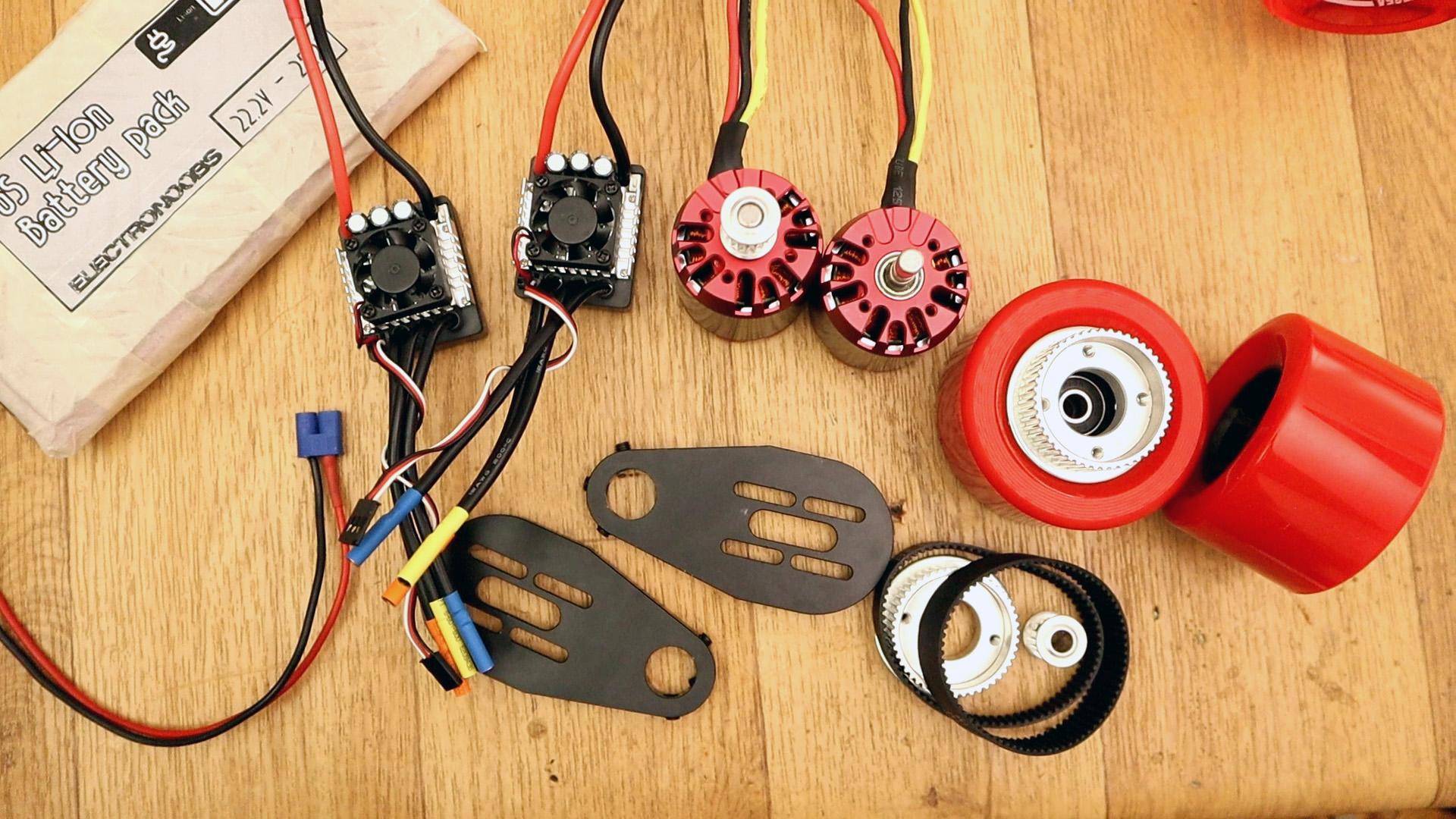
Brushless DC (BLDC) motors are the most common for electric longboards. They offer high efficiency and low maintenance. BLDC motors come in two main types: hub motors and belt-driven motors.
Hub motors fit inside the wheels. They provide a clean look and require less maintenance. Belt-driven motors use a pulley and belt system to drive the wheels. These motors offer more torque and better hill-climbing ability.
Consider motor size and KV rating. KV rating shows motor speed per volt. Lower KV gives more torque but lower speed. Higher KV means higher speed but less torque. Match motor specs to your riding needs.
Motor Mount Installation
Motor mounts attach motors to the trucks securely. Choose mounts made from strong materials like aluminum. Check compatibility with your trucks and motors before buying.
Start by loosening the truck’s axle nut. Slide the motor mount onto the truck hanger. Align the motor pulley with the wheel pulley. Tighten bolts to hold the mount firmly in place.
Proper alignment prevents belt slippage and wear. Double-check pulley spacing and belt tension. Too-tight or too-loose belts reduce performance and cause damage. Test the setup by spinning the wheels by hand.
Battery And Electronics
The battery and electronics form the heart of your electric longboard. Choosing the right components affects speed, range, and safety. Each part must work well together for smooth rides.
Understanding battery types and compatibility helps pick the best power source. The Electronic Speed Controller (ESC) manages motor power and controls acceleration. A reliable remote control and receiver let you steer and brake easily.
Battery Types And Compatibility
Most electric longboards use lithium-ion batteries. They offer high energy and low weight. Look for batteries with enough voltage to match your motor’s needs. Common packs range from 6S to 12S, where “S” means series cells. Higher voltage means more speed but shorter battery life. Balance capacity and power for your riding style.
Check battery size and shape to fit your enclosure. Ensure it has a built-in Battery Management System (BMS) for safety. The BMS prevents overcharging and overheating. Always use batteries designed for electric skateboards to avoid risks.
Electronic Speed Controller (ESC)
The ESC controls power from the battery to the motor. It adjusts speed and braking by changing the motor’s electrical input. Pick an ESC compatible with both your motor and battery voltage. ESCs have current limits; choose one that handles your motor’s max current.
Some ESCs include features like regenerative braking and smooth start. This improves battery life and ride comfort. Look for ESCs with good heat dissipation to avoid overheating during long rides. A quality ESC ensures responsive and safe control.
Remote Control And Receiver
The remote control sends signals to the ESC to control speed and braking. It usually connects via a wireless receiver on the board. Choose a remote with an ergonomic design for easy grip and precise control. Many remotes offer speed modes to suit beginners and experts.
Some remotes provide haptic feedback to signal speed changes or battery status. Check the receiver’s compatibility with your ESC for smooth communication. A reliable remote and receiver help you ride with confidence and safety.

Credit: www.instructables.com
Drivetrain Setup
The drivetrain setup is the heart of your electric longboard. It moves power from the motor to the wheels. A well-built drivetrain gives smooth rides and good speed. Choosing the right parts makes a big difference. Focus on the pulleys, belts, and motor options. Each part must fit well and work together. Understanding these parts helps you build a strong electric longboard.
Pulleys And Belts
Pulleys and belts transfer power from the motor to the wheels. The motor pulley is smaller and attached to the motor shaft. The wheel pulley is larger and connects to the wheel. A belt loops around both pulleys to transfer motion. Choose belts made of strong, flexible material. Timing belts with teeth prevent slipping. The right size belt keeps the system tight and efficient. Adjust belt tension to avoid noise and wear.
Wheel Pulley Attachment
The wheel pulley must attach securely to the longboard wheel. Use wheels designed for pulley installation. Some wheels come with built-in pulley mounts. Others require drilling holes or using adapters. The pulley should be centered to avoid wobbling. Tighten the pulley bolts firmly. Check alignment often to prevent belt slipping. Proper attachment improves power transfer and ride stability.
Hub Motor Options
Hub motors combine the motor and wheel in one unit. They are quiet and require less maintenance. Hub motors fit inside the wheel hub. Choose hub motors that match your longboard wheel size. They simplify drivetrain setup by removing belts and pulleys. Hub motors offer smooth acceleration and quiet rides. They may have lower torque than belt-driven motors. Consider your riding style before choosing hub motors.
Enclosure And Wiring
The enclosure and wiring are key parts of making a longboard electric. The enclosure houses the battery and electronic speed controller (ESC). It protects these parts from damage and weather. Proper wiring connects the battery, ESC, motor, and remote receiver. Good wiring ensures safe and smooth operation.
Careful attention to enclosure mounting and cable management improves performance. Following safety precautions reduces the risks of short circuits or damage. This section explains how to mount the enclosure, manage cables, and stay safe.
Enclosure Mounting
Select a sturdy enclosure that fits your battery and ESC. The enclosure should be waterproof or water-resistant. Place it in the center or rear of the deck for balance. Use strong double-sided tape or screws to attach the enclosure. Make sure it is tight and will not move while riding. Avoid placing the enclosure where it may hit obstacles or the ground.
Cable Management
Organize wires neatly inside the enclosure. Use zip ties or Velcro straps to bundle cables together. Keep wires away from moving parts like wheels and trucks. Leave some slack in cables to prevent tension when turning. Use heat-shrink tubing or electrical tape to cover exposed wires. Label cables if possible for easy troubleshooting later.
Safety Precautions
Always disconnect the battery before working on wiring. Check all connections for tightness and proper insulation. Avoid crossing positive and negative wires to prevent shorts. Use a fuse or circuit breaker between the battery and the ESC. Test the setup at low speed first in a safe area. Wear protective gear during tests to avoid injuries.
Assembly Steps
Assembling your electric longboard requires careful attention to each step. Proper assembly ensures smooth performance and safety. The process involves installing the motor, placing the battery and ESC, and connecting all electronics. Follow these steps to build a reliable electric longboard that rides well and lasts long.
Motor Installation
Start by securing the motor to the truck with a motor mount. Align the motor pulley with the wheel pulley carefully. Tighten the screws to hold the motor firmly in place. Check that the motor shaft spins freely without any obstruction. Proper alignment reduces noise and wear during riding.
Battery And ESC Placement
Choose a sturdy enclosure to protect the battery and ESC. Attach the enclosure under the deck using screws or strong adhesive. Position the battery and ESC inside with enough space for ventilation. Keep wires neat to avoid damage. Secure all components so they do not move during rides.
Connecting Electronics
Connect the motor wires to the ESC following the color codes. Attach the battery wires to the ESC, ensuring correct polarity. Connect the receiver to the ESC to receive signals from the remote. Use heat-shrink tubes or electrical tape to cover exposed wires. Test all connections for secure fit and proper function before finalizing.
Testing And Troubleshooting
Testing and troubleshooting are vital steps after assembling your electric longboard. These steps confirm that all parts work together smoothly. They also help spot any problems early. Proper testing ensures safety and optimal performance.
Initial Power-on
Start by turning on the power system carefully. Check that the battery is fully connected. Make sure the ESC and motor receive power. Look for any warning lights or unusual sounds. Keep the remote control close and ready. Power on the remote and confirm it pairs with the receiver. Avoid sudden throttle inputs during this phase.
Speed And Brake Testing
Test speed control by slowly increasing the throttle. Observe if the motor responds smoothly without jerks. Check acceleration and deceleration for balance. Apply the brake gently to test stopping power. The braking should feel firm but controlled. Repeat these tests on flat ground first. Monitor the battery level and motor temperature during tests.
Common Issues And Fixes
If the motor does not start, check wiring connections. Loose or reversed cables cause most problems. Inspect the battery charge and ESC settings. A motor that vibrates or hums may have a pulley misalignment. Tighten the motor mount and adjust belt tension. Remote control lag can result from interference or a low battery. Reset or replace the remote battery if needed. Always address issues before riding fully.
Performance Tuning
Performance tuning is key to enjoying your electric longboard. It helps you get the best speed, range, and power for your rides. Proper adjustments make your board safer and more fun. Focus on fine-tuning the settings, battery use, and motor power.
Adjusting Speed Settings
Set speed limits on your remote or ESC for safety. Start with lower speeds to build confidence. Gradually increase speed as you get comfortable. Check your ESC manual to change acceleration curves. Smooth acceleration reduces battery drain and motor strain. Balance speed with control for better rides.
Range Optimization
Use a high-capacity battery for longer rides. Keep the battery charged between 20% and 80% for a better life. Ride at moderate speeds to save power. Avoid sudden starts and stops to extend range. Reduce the weight on the board by carrying light gear. Check tire pressure to reduce rolling resistance.
Hill Climbing Tips
Choose a motor with enough torque for hills. Lower your gear ratio for more climbing power. Use a slower speed mode on steep inclines. Lean forward slightly to keep balance uphill. Avoid overloading your board with heavy items. Practice hill riding in safe areas before tough hills.
Diy Kits And Resources
Turning a regular longboard into an electric one starts with the right tools and parts. DIY kits simplify this process by offering all necessary components in one package. These kits suit beginners and those with some technical skill. They save time and reduce guesswork, making your build smoother and more enjoyable.
Besides kits, many online resources guide you through each step. Tutorials explain assembly, wiring, and testing clearly. Community forums and groups offer advice, answer questions, and share experiences. These resources help build confidence and ensure your electric longboard performs well and lasts long.
Popular Kits To Consider
Several electric longboard kits stand out for ease and quality. Some include motors, batteries, ESCs, and remotes tailored to fit most decks. Others offer modular parts to customize speed and range.
Look for kits with clear instructions and good customer support. Brands like DIY Electric Skateboard and Ownboard provide reliable options. These kits often include motor mounts and pulley systems for smooth riding.
Choose a kit based on your budget, skill level, and desired performance. Many kits come with safety features and durable enclosures to protect electronics from damage.
Tutorials And Community Support
Step-by-step tutorials help you understand each part of the build. Videos and written guides show how to mount motors, connect batteries, and set up controllers. They also explain troubleshooting tips to fix common issues.
Online communities provide a space to share your progress and ask for help. Platforms like Reddit and electric skateboard forums have active members ready to assist. You can learn from others’ successes and mistakes.
Joining these groups improves your skills and keeps you updated on new parts and techniques. Engaging with experts and hobbyists creates a support network for your DIY project.
Legal And Safety Tips
Making a longboard electric is exciting and fun. Safety and legal rules must guide every step. Riding an electric longboard without knowing the laws can cause trouble. Being safe protects you and others on the road. Below are key tips on local laws and safety gear.
Local Regulations
Check your city and state laws about electric longboards. Some places limit speed or where you can ride. Rules vary for sidewalks, bike lanes, and streets. Some areas require registration or insurance. Find out if helmets or lights are required. Follow all rules to avoid fines and stay safe.
Riding Safety Gear
Wear a helmet every time you ride your electric longboard. Use knee and elbow pads to protect from falls. Gloves help protect your hands and improve grip. Bright or reflective clothing increases visibility to drivers. Consider wrist guards to prevent injuries during a fall. Proper gear reduces injury risk and builds confidence.

Credit: www.youtube.com
Frequently Asked Questions
Can You Turn A Normal Skateboard Into An Electric One?
Yes, you can convert a normal skateboard into an electric one using a motor, battery, ESC, and remote control. Mount the motor on the trucks, install the battery and ESC in an enclosure, attach wheel pulleys, then test the setup carefully before riding.
Are Electric Longboards Street Legal?
Electric longboard legality varies by location and local laws. Many places restrict their use on public roads or sidewalks. Riders should check specific state or city regulations before riding. Compliance with speed limits, helmet laws, and age restrictions often determines street legality.
How Much Does It Cost To Make An Electric Skateboard?
Building an electric skateboard typically costs between $300 and $700. Expenses include deck, motor, battery, ESC, and remote control. Quality and performance goals influence the total price. DIY kits can reduce costs and simplify assembly.
How To Make An Electric Skate?
Choose a sturdy longboard deck and attach motor mounts to the trucks. Install motor, pulleys, and belt drivetrain. Secure the battery and ESC in an enclosure on the deck. Connect the remote receiver and test all electronics. Adjust settings for speed and braking before riding.
Conclusion
Making your longboard electric takes patience and the right parts. Start by choosing a strong deck and matching motor, battery, and controller. Secure the motor and pulleys properly for smooth power transfer. Protect electronics with a sturdy enclosure mounted on the board.
Test the setup carefully to ensure safety and control. This project lets you enjoy faster rides and more fun. With basic tools and clear steps, anyone can build an electric longboard. Keep learning from tutorials and practice safe riding habits always.

